How to Tell If Your Job Is Actually at Risk from AI
Not sure if you should worry about AI taking your job? The real threat isn't your title, it's what fills your day. Here's how to know if you're vulnerable.
Read

How AI Will Change Jobs: What You Need to Know to Future-Proof Your Career
You've felt the pit in your stomach reading headlines about AI replacing workers. Maybe you've already seen your company roll out automation tools, or watched a colleague's entire role get absorbed into a ChatGPT workflow. The fear isn't abstract anymore, it's sitting in your chest every time you clock in, wondering if what you're doing today will matter tomorrow.
The reason most people freeze when they think about AI and jobs isn't because they're uninformed. It's because no one has given them a framework that's both honest and actionable. The discourse swings between two extremes: techno-optimists who say "just adapt" without explaining how, and alarmists predicting mass unemployment without offering real guidance. Neither camp helps you make decisions about your actual career. This post cuts through both. We're going to look at how AI will genuinely change jobs across industries, which roles will grow stronger, and most importantly what you can do right now to build a career that doesn't just survive AI, but becomes more valuable because of it.
How AI Will Change Jobs: Understanding the Real Impact on Different Industries
Let's start with what's actually happening, not what think pieces predict might happen in 2040.
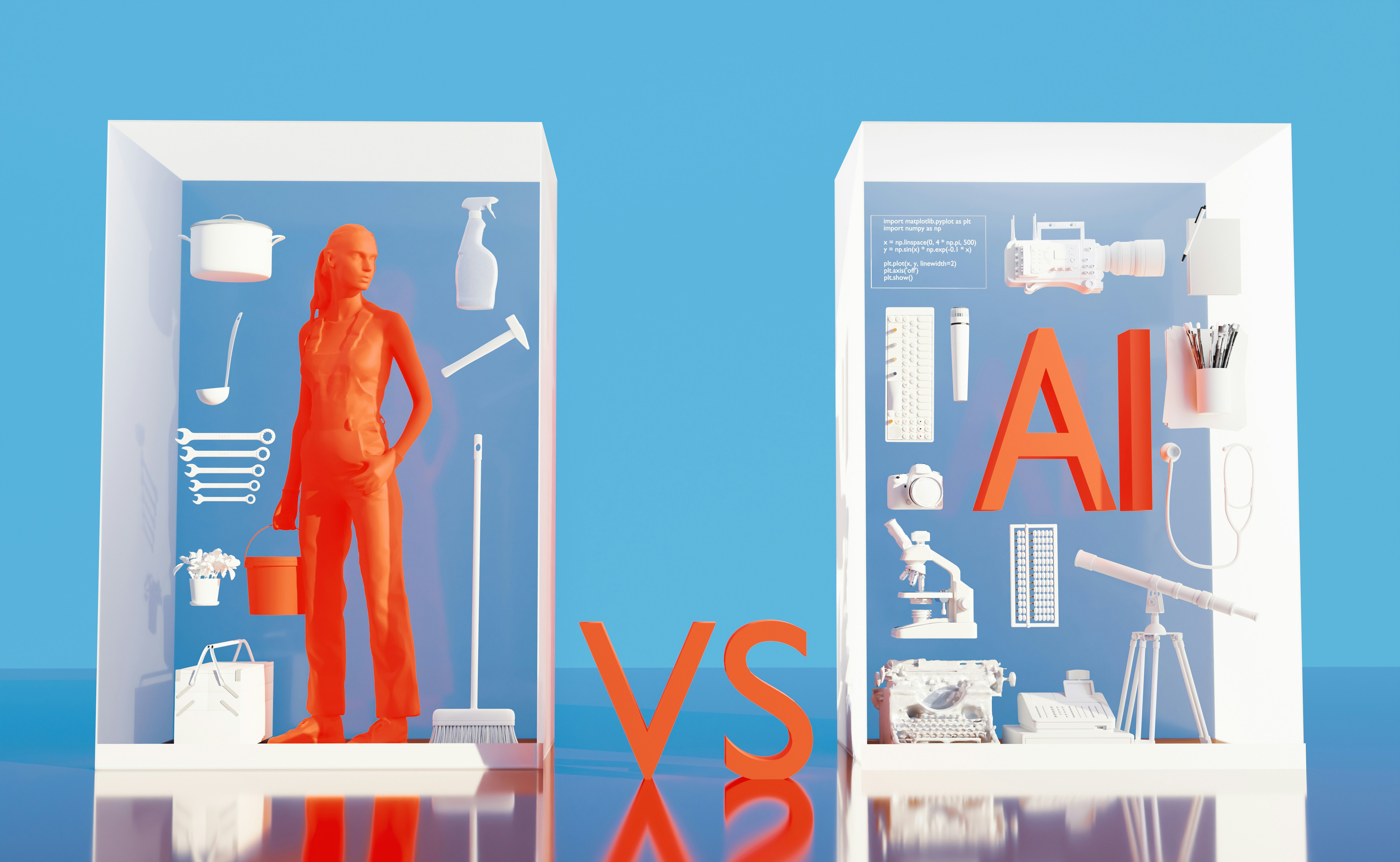
AI isn't coming for "jobs" in some monolithic way. It's coming for tasks. Specific, repeatable, pattern-based tasks that sit inside broader roles. The question isn't whether your job title will exist, it's whether the core tasks that fill your day can be automated, and what remains when they are.
Here's how this plays out across major sectors:
Healthcare: AI is already reading radiology scans, flagging anomalies, and processing patient intake forms. But it's not replacing doctors or nurses. Instead, it's compressing the administrative and diagnostic grunt work, which means healthcare workers can spend more time on judgment calls, patient communication, and complex care coordination. The jobs that grow here are the ones that combine clinical knowledge with emotional intelligence and systems thinking. The jobs that shrink are the ones that only involved data entry or basic pattern recognition.
Finance and Accounting: Bookkeeping, basic tax prep, and financial analysis reports are already heavily automated. If your role is built around processing transactions or generating standard reports, that's vulnerable. But advisory roles, helping clients make financial decisions, navigating edge cases, building custom strategies, those are expanding. AI gives financial advisors superpowers; it doesn't replace them. The dividing line is whether you're executing tasks or making judgment calls.
Marketing and Creative Work: AI can write ad copy, generate images, edit videos, and analyze campaign performance faster than any human team. But it can't understand brand voice at a soul level, navigate stakeholder politics, or make the creative leaps that come from lived experience and cultural intuition. The marketers who survive are the ones who use AI as a production assistant, not the ones competing with it on speed. Strategy, taste, and human connection become the differentiators.
Legal Services: Document review, contract analysis, and legal research are being automated rapidly. Paralegals who only do discovery work are facing contraction. But lawyers who negotiate, who counsel clients through emotionally complex situations, who argue novel cases, they're fine. AI makes them faster. The pattern here is consistent: if your value comes from judgment, nuance, and human trust, you're in a stronger position than if your value comes from processing information.
Customer Service and Support: Chatbots handle tier-one support now. If your job is answering the same 20 questions over and over, that's disappearing. But complex troubleshooting, de-escalation, and relationship management, those still require humans. The customer service jobs that remain will be fewer, but they'll require more skill. You'll be handling the hard cases AI can't solve, which means the role gets harder and more valuable.
Education and Training: AI tutors can personalize learning at scale. They can grade assignments, answer basic questions, and adapt to student pace. But they can't mentor. They can't inspire. They can't see when a student is struggling with something deeper than the material. Teachers who only lecture and grade are feeling pressure. Teachers who coach, who build relationships, who design learning experiences, they're becoming more essential, not less.
The through-line across all industries: AI compresses the informational and procedural parts of work. What remains is the human, the strategic, and the relational. If most of your day is spent doing things that could be described in a clear procedure manual, you need to evolve your role or change your role. If your day involves navigating ambiguity, building trust, or making calls that require contextual judgment, you're building on solid ground.
Jobs of the Future: Which Roles Will Thrive in an AI-Driven Economy
So what does "thrive" actually look like? Not just survive, but grow in demand and compensation as AI becomes ubiquitous?
These are the role categories seeing expansion:
AI Implementation Specialists: Every company needs people who can figure out which AI tools to use, how to integrate them into existing workflows, and how to train teams to use them effectively. This isn't about being a machine learning engineer (though that's one path). It's about being the bridge between technology and operations. If you can understand both the business problem and the technical solution, you're in high demand. This role barely existed five years ago. Now it's exploding.
Data Interpreters and Strategists: AI generates insights at massive scale. But someone needs to decide which insights matter, how to communicate them to stakeholders, and what actions to take based on them. Data analysts who just make dashboards are being automated. Data strategists who can ask better questions and translate numbers into business decisions are becoming indispensable.
Human-Centered Designers: As more interfaces become AI-powered, companies need people who can design experiences that feel human, intuitive, and trustworthy. This includes UX designers, but also service designers, experience architects, and anyone who thinks about how humans interact with complex systems. The more automated the backend, the more crucial the human-facing layer becomes.
Skilled Trades with Diagnostic Complexity: Electricians, plumbers, HVAC technicians, specialized repair workers, these roles require physical presence, real-time problem-solving in unpredictable environments, and manual dexterity in non-standardized situations. AI can help with diagnostics, but it can't crawl under a house or rewire a panel. These jobs are AI-resistant by nature and chronically understaffed.
Healthcare Roles Requiring Empathy and Judgment: Nurses, therapists, counselors, patient advocates, palliative care workers. Anything where the core value is human presence, emotional attunement, and ethical judgment. AI can assist, but it can't replace the therapeutic relationship or the calming presence of a skilled caregiver.
Creative Directors and Strategists (Not Just Executors): AI can execute creative briefs. It can't write the brief. It can generate options. It can't choose the right one for reasons that involve brand legacy, cultural moment, and stakeholder trust. If you're a graphic designer who only makes what you're told, that's tough. If you're a creative director who shapes vision and makes taste-based calls, you're more valuable than ever.
Salespeople and Account Managers Who Build Relationships: Transactional sales are getting automated. But complex B2B sales, relationship-driven account management, and sales that require deep consultation, those are growing. The sale that happens because of trust, history, and understanding the client's unstated needs? AI can't do that.
Ethical and Regulatory Specialists: As AI raises questions about bias, privacy, transparency, and accountability, companies need people who can navigate the ethical and legal landscape. AI ethicists, compliance specialists, and policy advisors are emerging as critical hires.
Trades and Roles in Aging and Childcare: Home health aides, elderly care workers, childcare providers. These are human-presence jobs that our aging society desperately needs more of. They're chronically underpaid, but they're among the most AI-resistant roles in the economy.
Notice the pattern: the jobs that thrive are either highly technical (building/implementing AI), highly human (empathy, judgment, relationships), or highly physical in unstructured environments. The squeeze is happening in the middle, the roles that are cognitive but procedural, digital but predictable.
Best Careers for the Future: Skills and Positions That Are AI-Resistant
If you're trying to figure out your next move, or you're early enough in your career to be choosing a path, here's what to optimize for:
Skills That Are Genuinely AI-Resistant:
Complex Communication: Can you explain a difficult concept to someone who's anxious or confused? Can you negotiate a deal where both parties have competing interests? Can you de-escalate conflict? These require reading subtext, managing emotion, and adapting in real time. AI can't do this at a level that builds trust.
Contextual Judgment: Can you make decisions in situations where the "right answer" depends on factors that aren't written down? Where ethics, culture, politics, and incomplete information all matter? That's human territory. AI gives you options. You still have to choose.
Creative Synthesis: Can you pull from unrelated domains and combine ideas in new ways? Can you see patterns across disparate information and generate something original? AI remixes the existing. Humans create the new.
Strategic Thinking: Can you see three moves ahead? Can you anticipate how a decision will ripple through an organization or market? Can you ask the question no one else is asking? Strategy is higher-order thinking. AI is a tool strategists use, not a replacement for strategy.
Emotional Intelligence: Can you read a room? Do you know when someone is saying yes but means no? Can you build trust with people who are skeptical? This is core to leadership, sales, coaching, therapy, and management. AI has no emotional experience to draw from.
Physical Skill in Variable Environments: Can you fix something that's broken when every situation is a little different? Can you work with your hands in spaces that aren't standardized? Robots are improving, but they're still terrible in unstructured, unpredictable physical environments.
Positions to Consider If You're Starting Fresh or Pivoting:
Healthcare Practitioner (NP, PA, RN, PT, OT): Combines technical skill, human interaction, and judgment. Chronic labor shortage. AI makes you more effective, doesn't replace you.
Skilled Trades (Electrician, Plumber, HVAC, Elevator Repair): Physical, complex, variable. Strong pay. Low risk of automation. Often unionized. Can't be outsourced.
Counselor or Therapist (LMFT, LCSW, Clinical Psychologist): Pure human connection and therapeutic expertise. Growing demand. AI might help with diagnostics or note-taking, but the core work is human presence.
Data Analyst/Strategist (with Business Acumen): If you can combine data literacy with strategic thinking and communication, you're extremely valuable. The key is moving beyond reporting into interpretation and recommendation.
Product Manager (Tech or Non-Tech): You're the translator between user needs, business goals, and technical possibility. Requires empathy, strategy, and judgment. AI helps you, doesn't replace you.
UX/Service Designer: Designing how humans interact with complex systems (AI-powered or otherwise). Requires empathy, creativity, and systems thinking.
Sales or Account Management (Complex/Consultative): If you're good at building relationships and solving ambiguous problems, this remains strong. Avoid purely transactional sales roles.
Teaching/Instructional Design (with Coaching Focus): The future of education is more personalized and human, not less. Teachers who mentor and inspire are irreplaceable.
If you're not starting fresh, the question is: can you shift your current role toward the AI-resistant parts? If you're in marketing, can you move toward strategy and away from execution? If you're in finance, can you move toward advisory and away from reporting? If you're in operations, can you move toward process design and away from process execution?
The goal isn't to find a job AI can't touch. It's to build skills AI can't replicate and position yourself in roles where those skills are the core value, not a nice-to-have.
How to Future-Proof Your Career: Practical Steps to Stay Relevant and Competitive
Knowing what's happening isn't enough. You need a plan. Here's how to build career resilience in an AI-accelerated economy:
Step 1: Audit Where Your Time Actually Goes
For one week, track your tasks in three categories:
Automatable: Repetitive, rule-based, could be done by a well-designed AI tool.
Augmentable: Complex tasks where AI could make you faster or better, but can't do it without you.
Human-core: Tasks that require judgment, relationships, empathy, or contextual decision-making that only you can do.
If more than 60% of your week is in the "Automatable" bucket, you're in a vulnerable position. Not immediately, but within the next few years. You need to actively shift your role or start building skills that move you into the other categories.
Step 2: Learn to Use AI as a Leverage Tool, Not a Threat
The people who win aren't the ones avoiding AI. They're the ones using it to 10x their output so they can focus on higher-order work.
If you're a writer, use AI to draft outlines and speed up research. If you're a designer, use AI to generate variations quickly. If you're a developer, use AI to write boilerplate code. If you're a strategist, use AI to analyze data faster.
The goal is to compress the tedious parts of your job so you have more time for the parts that actually require your brain. The professionals who integrate AI into their workflow will outcompete the ones who resist it. But the professionals who let AI do their thinking for them will get left behind.
Step 3: Build One Deeply Human Skill
Pick one:
Public speaking and presentation
Negotiation and conflict resolution
Coaching and mentorship
Storytelling and narrative structure
Facilitation and meeting design
Emotional intelligence and leadership presence
These are skills AI can't replicate. They're also skills that make you promotable and increase your earning power. Invest in one deliberately. Take a course. Get coaching. Practice in public. This is your long-term insurance.
Step 4: Develop Cross-Functional Fluency
The future belongs to people who can operate at the intersection of disciplines. You don't need to be an expert in everything, but you need to speak multiple languages.
If you're in operations, learn enough about data to have a real conversation with analysts. If you're in marketing, learn enough about product development to understand trade-offs. If you're technical, learn enough about business strategy to connect your work to revenue.
The more you can translate between domains, the more valuable you are. AI can do depth. Humans are still better at breadth and integration.
Step 5: Build Visible Expertise
In a crowded market, being good isn't enough. People need to know you're good.
Start sharing what you know:
- Write LinkedIn posts about what you're learning
- Create a simple portfolio or case study of your work
- Speak at a local meetup or industry event
- Teach someone else a skill you have
This isn't about being an influencer. It's about being findable and credible when opportunities come up. The people who get hired for the best roles aren't always the most qualified—they're the most visible among the qualified.
Step 6: Prioritize Roles and Companies That Value Humans
Not every company is approaching AI the same way. Some see it as a way to cut headcount. Others see it as a way to empower their people to do better work.
When you're evaluating a job or employer, ask:
- How is this company using AI? To replace people or to augment them?
- What skills does leadership say they value most?
- Are they investing in training and development, or just efficiency?
- Do they have a point of view on how humans and AI should work together?
The companies that treat AI as a tool for human potential are the ones where you want to build your career. The companies that treat humans as a cost center to be minimized are the ones you want to leave.
Step 7: Get Honest About Whether Your Career Still Fits You
Here's the uncomfortable truth: for some people, the threat of AI is clarifying something they've been avoiding.
If you've been doing work that feels hollow, that you're only doing for the paycheck, and now you're realizing that work might not even exist in five years, maybe that's not a crisis. Maybe it's permission.
Permission to finally ask: what do I actually want to do? What am I good at that matters? What kind of work would I do even if it were harder, because it felt aligned?
AI is a forcing function. It's making a lot of people confront whether they're building a career that fits who they are, or just riding inertia.
If you're feeling that tension, don't ignore it. The time to make a change is before you're forced to make one in panic.
Embracing Change and Taking Control of Your Career Path
The anxiety around AI and jobs is real, and it's not going away. But the people who will be fine better than fine aren't the ones with the "safest" jobs. They're the ones who are honest about what's changing, intentional about what they're building, and willing to evolve before they have to.
You don't need to become a machine learning engineer. You don't need to abandon your field. You need to shift your role toward the parts of work that are deeply human: judgment, creativity, strategy, relationships, and care.
And you need to get clear on whether the career you're in is one you're defending out of alignment, or out of inertia.
If any of this resonates, it's probably not a coincidence. Most people who end up here are already asking the right questions, they just haven't had a system to find the answers. That's what Navi is built for. The assessment takes about 15 minutes and gives you a personalized Fulfillment Map: the careers most aligned with who you actually are, not just what you've done or what's left after automation. It's designed for moments exactly like this one, when the old path isn't clear anymore, and you need a new map.
AI will change jobs. That's certain. But it doesn't have to make you obsolete. The question is whether you're going to react, or redesign. Whether you're going to defend the past, or build toward something better. The future doesn't belong to people with the safest jobs. It belongs to people who know who they are and what they're built to do. Start there.