Career Change in the New Year: Why January Is Your Best Shot at Finding a New Career?
Here's why January might be the perfect time for finding a new career, backed by data and real career change advice from people who've been exactly where you are.
Read

That post-holiday feeling hits different when you realize you spent two weeks dreading going back to work. If you're contemplating a career change as the new year kicks off, you're not just following a cliché you're actually making a smart strategic move.
Here's why January might be the perfect time for finding a new career, backed by data and real career change advice from people who've been exactly where you are.
The Science Behind New Year Career Changes
The urge to make a career change in January isn't just New Year's resolution energy talking. According to Glassdoor's analysis of hiring patterns, job seeker activity is 17% higher in January than in a typical month, with the week of Martin Luther King Jr. Day consistently ranking as the most active job-seeking week of the year.
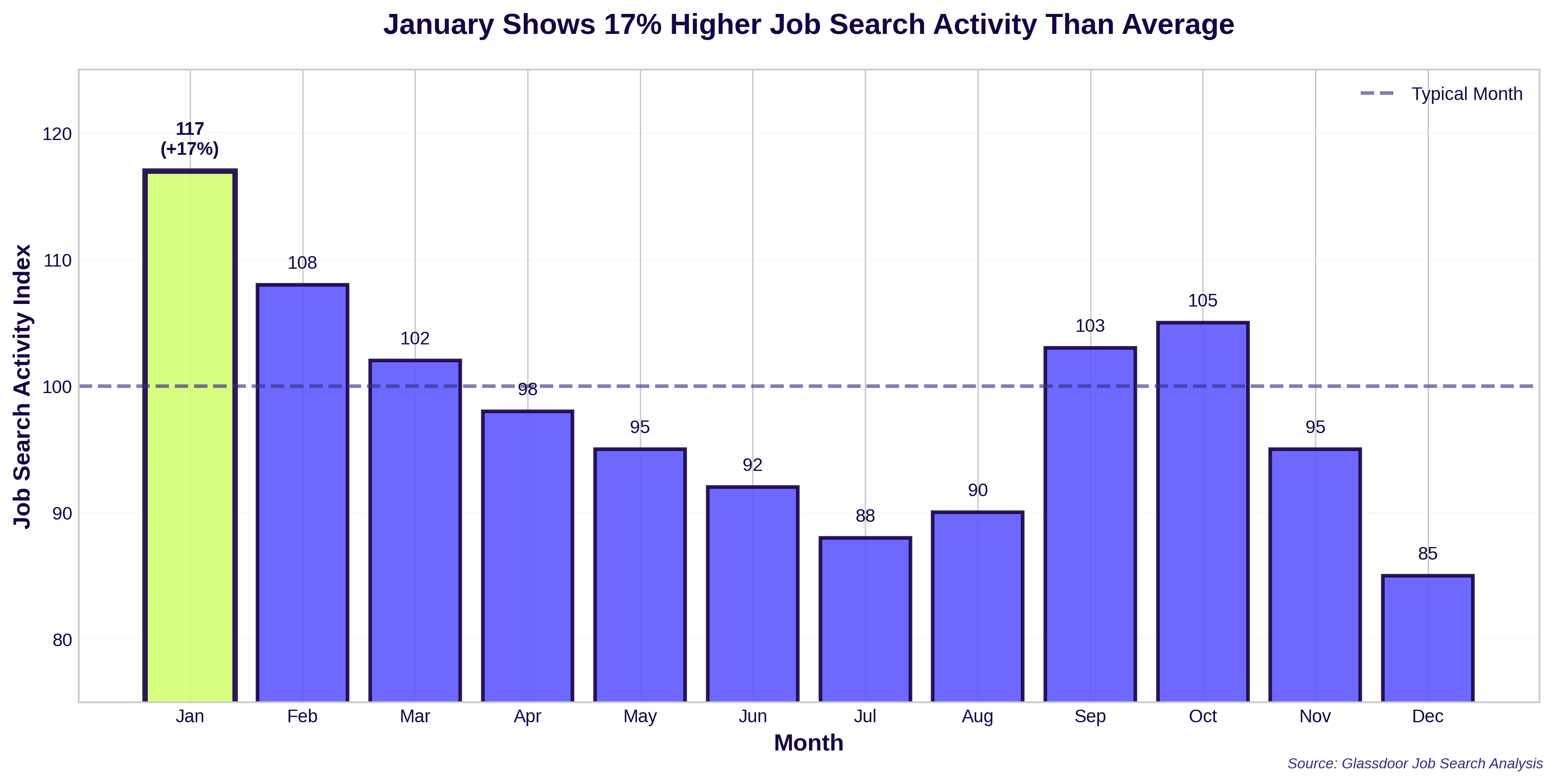
Why the January spike? Career management experts point to what psychologists call "temporal landmarks" psychological reset points that make us naturally evaluate our lives. This fresh-start mentality, combined with year-end bonuses being paid out and companies finalizing Q1 budgets, creates the perfect storm for career transitions.
Career Change Advice: Know Your "Why" Before You Jump
Before you start sending out applications for a career change, the most important career change advice experts give is this: understand what's actually driving your desire to leave.
Harvard Extension School's career advisors recommend starting with self-assessment. Are you unhappy with your employer, or do you genuinely need a different career path? Do you want to use different skills, or do you just need better work-life balance?
The top motivations for finding a new career in 2025 are higher salary (leading the pack), better work-life balance, flexible working options, and improved job satisfaction. Understanding which of these matters most to you helps you target the right opportunities when you're finding a new career not just any career.
Best Careers for Career Changers in 2025
If you're wondering about the best careers for career changers, you're asking the right question. Some industries make career transitions easier than others, especially if you're starting from scratch.
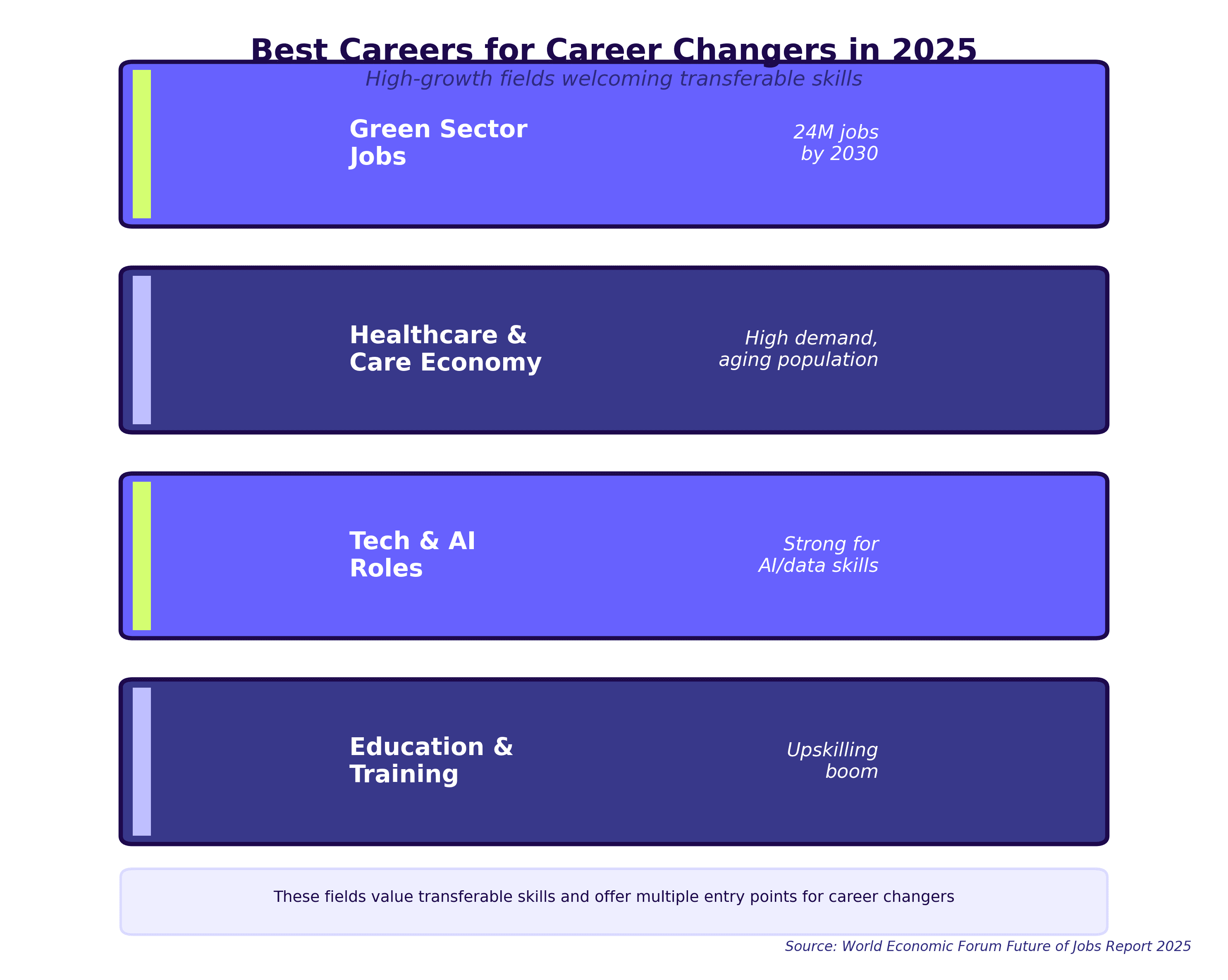
According to the World Economic Forum's Future of Jobs Report 2025, several sectors are projected to see significant growth through 2030:
High-growth fields for career changers:
Healthcare and care economy roles (nursing, social work, personal care) - driven by an aging population
Green sector jobs - projected to reach 24 million positions by 2030
Tech and digital roles - despite recent layoffs, demand remains strong for AI and information processing
Education and training - particularly in upskilling and reskilling programs
What makes these the best careers for career changers? They often value transferable skills and offer multiple entry points. Plus, many employers in these fields are actively creating pathways for people without traditional backgrounds.
Finding a New Career: Your Step-by-Step Strategy
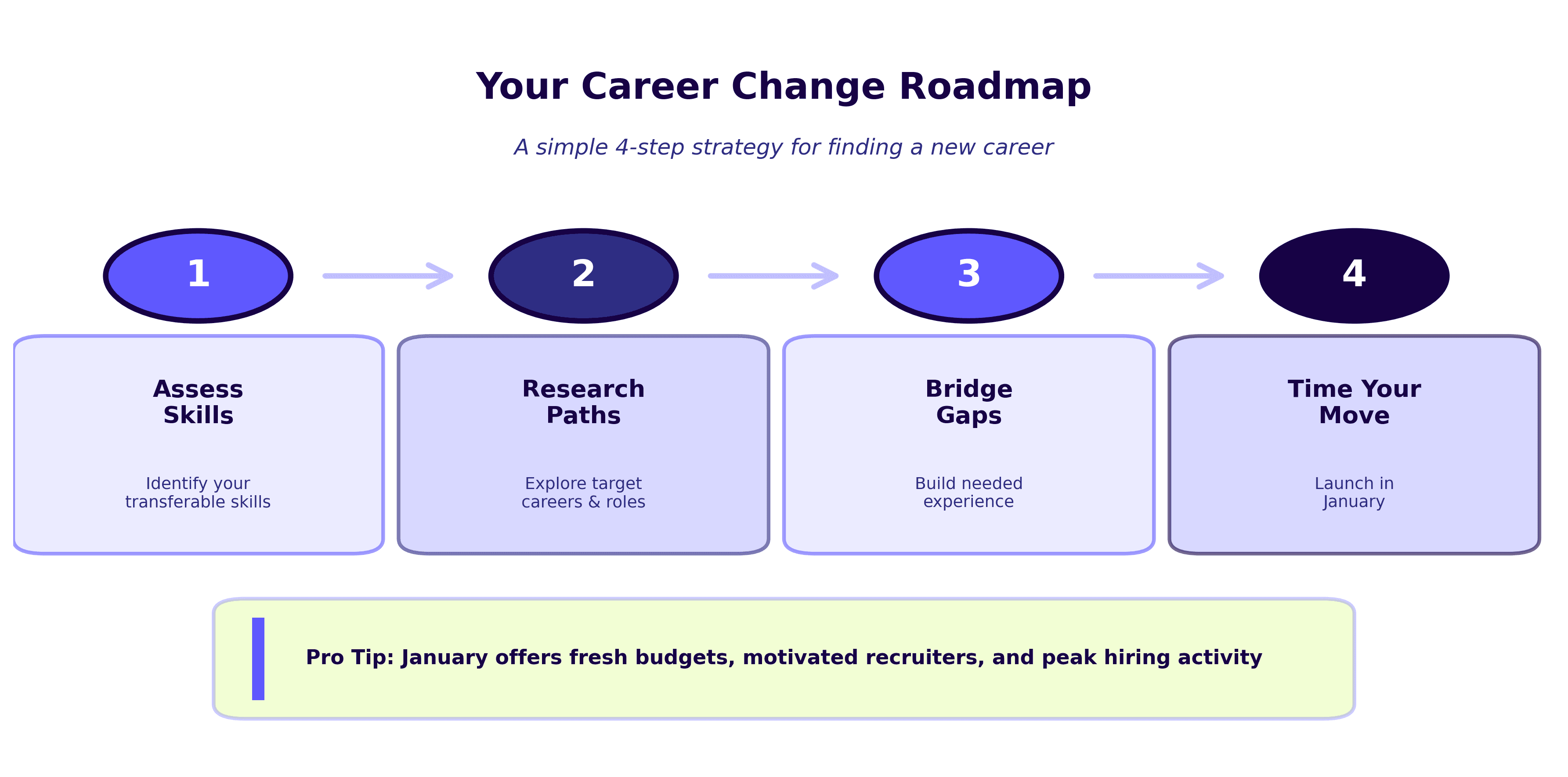
1. Assess Your Transferable Skills
When finding a new career, your transferable skills are your secret weapon. The U.S. Department of Labor's CareerOneStop offers free tools like the Skills Matcher and Interest Assessment that help you identify which of your current abilities translate to new roles.
Don't discount soft skills. Communication, problem-solving, project management, and leadership matter across industries. Creative thinking, resilience, and agility are among the most in-demand skills for 2025-2030.
2. Research Your Target Path
Finding a new career means becoming a mini-expert in your target field. Research typical job duties, required education and training, median pay, and job outlook for roles you're considering.
Better yet? Conduct informational interviews with people already working in roles you're targeting. These conversations provide insider knowledge you won't find in job descriptions and they're less awkward than you think. Most people actually enjoy talking about their work.
3. Bridge the Gap Strategically
The best career change advice for handling skills gaps? You don't need to be perfect to start. Job postings requiring specific years of experience have dropped significantly, and 85% of employers now prioritize upskilling their workforce rather than hunting for the "perfect" candidate with every credential.
For finding a new career path, consider:
Online courses and certifications (LinkedIn Learning, Coursera, industry-specific programs)
Volunteer work or side projects in your target field
Part-time or freelance roles to build experience
Professional associations and networking groups
4. Time Your Move Strategically
January isn't just psychological timing it's practical. Companies receive updated budgets and sales forecasts at the start of the year. Many firms posted 134% more job listings in the first two weeks of January compared to late December. Recruiters are motivated, budgets are fresh, and competition hasn't peaked yet.
The Reality Check: What to Expect When Making a Career Change
Let's talk honestly about what finding a new career looks like in 2025's market.
According to Indeed's 2025 Jobs & Hiring Trends Report, overall hiring demand has cooled from 2022-2023 peaks. The hires rate fell to 3.3% as of October 2024 the lowest since 2013. This means competition is real, and you need to be strategic.
But here's the good news: demand hasn't disappeared. Job postings remain 10-13% above pre-pandemic levels, and about 6.2 million workers successfully transfer to new occupational groups each year. Companies are still growing, still hiring, and still open to people making a career change—you just need to be smart about how you approach it.
Career Change Advice From People Who've Done It
The best career change advice comes from people who've actually made the leap. Here's what successful career changers emphasize:
Start smaller than you think. Career management experts note that people often assume they need a huge change to be happy. Sometimes a different setting or role within your industry is enough. You don't have to blow up your entire career to find satisfaction.
Your network matters more than you think. Informational interviews and professional connections often matter more than perfect qualifications when finding a new career. Real relationships open doors that polished resumes can't.
Give yourself time. January hiring, while more plentiful, can move slower than summer hiring. Companies have more resources and time to be selective, so be patient with the process. The right opportunity is worth waiting for.
Making Your Career Change in 2025
Finding a new career takes courage, but you're making this move at a strategically smart time. January's combination of psychological momentum, fresh company budgets, and increased hiring activity creates advantages you won't get in July or October.
The data is clear: this is when both job seekers and employers are most active, most motivated, and most open to new possibilities. Whether you're pursuing one of the best careers for career changers or carving out something entirely your own, you've got better odds of success when you move in January.
The question isn't whether you can make a career change it's whether you're ready to act on it.
Ready to Navigate Your Career Change?
Making a career change is exciting and overwhelming in equal measure. You need real tools, real guidance, and a real community of people who understand what you're going through.
That's exactly why we're building Navi to help you navigate finding a new career with confidence, whether you're exploring options, making the leap, or figuring out your next move after landing somewhere new.
We're launching soon. Join the waitlist at trynavi.com to get early access when we go live.
Want to connect with others making a career change right now? Join our Discord community to share your journey, get real career change advice from people in the trenches, and celebrate wins together.
New year, new career. Let's make it happen.